



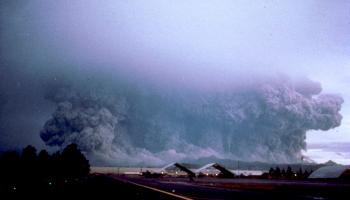
Stratospheric aerosols originate for the most part from volcanic eruptions and have a large influence on the Earth’s atmosphere and climate. BIRA-IASB is involved in the monitoring of these aerosols, delivering high quality data to centralised databases like the Copernicus programme, to be integrated in climatological models, among other things.

Royal Belgian Institute for Space AeronomyPhysics and chemistry of the atmosphere of the Earth and other planets, and of outer space.
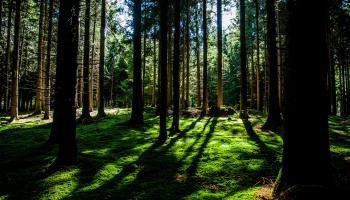
March 21st is International Forest Day, an opportunity to celebrate and raise awareness on the importance of all types of forests. Trees emit isoprene, which strongly affects atmospheric chemistry and Earth's climate. BIRA-IASB scientists work on estimating how much isoprene is released, an important element in climate modelling and tackling climate change.
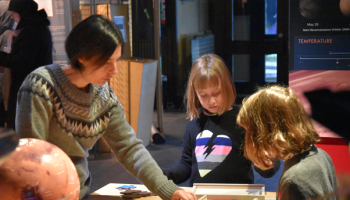
February 11th is the International Day of Women and Girls in Science. Why did the United Nations establish this yearly event? How have women researchers been impacted differently by the COVID-19 pandemic? And did you know about the gender gap on Wikipedia, the internet’s most beloved source of encyclopedic information? In this video, we have an open exchange about these topics.
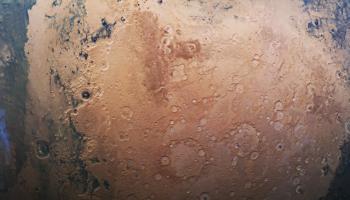
ESA-Roscosmos ExoMars Trace Gas Orbiter has detected a new gas for the first time. Sea salt embedded in the dusty surface of Mars and lofted into the planet’s atmosphere has led to the discovery of hydrogen chloride. The spacecraft is also providing new information about how Mars is losing its water.
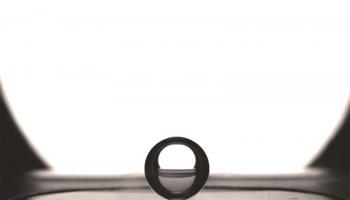
On board the European module of the International Space Station (ISS), January 26, 2021, will mark the end of two RUBI experiment sessions inside the Fluid Science Laboratory (FSL) rack. The FSL rack can host experiments for the study of the dynamics of fluids in space and RUBI — the Reference mUltiscale Boiling Investigation — is expanding our knowledge on the boiling process. At B.USOC (Belgian User Support and Operation Centre), the operators were in charge of this complex ESA instrument.

Stanford University has recently released a list that represents the top 2% of the most-cited scientists in the world in various disciplines. A total of 1413 Belgian scientists have made it into this world ranking, with 9 of them listed in the top 10 in their research field. One of the researchers who made it onto the list is from BIRA-IASB!